Drive economic opportunities and success for small and mid-sized farm and food businesses
Develop targeted, region-specific value chain solutions
Maximize the impact of locally driven investment
Collaborate with USDA team to ensure ongoing, regionally appropriate support and coordination
Complement, integrate, and support other USDA programs
Foster a more diversified and resilient food system.
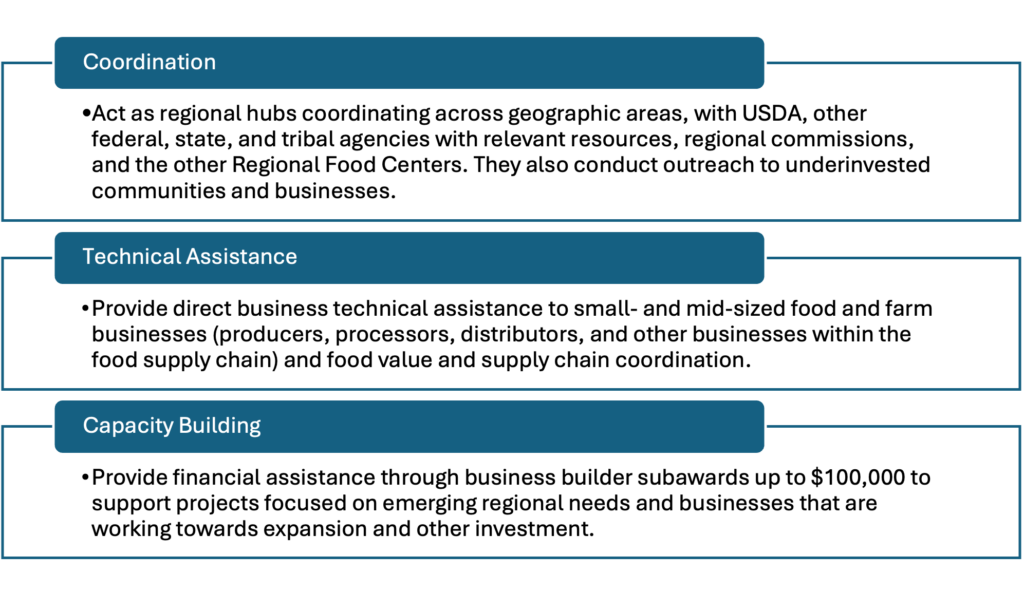
These goals are achieved through the following strategies:
This work is actually about re-regionalizing the food system.
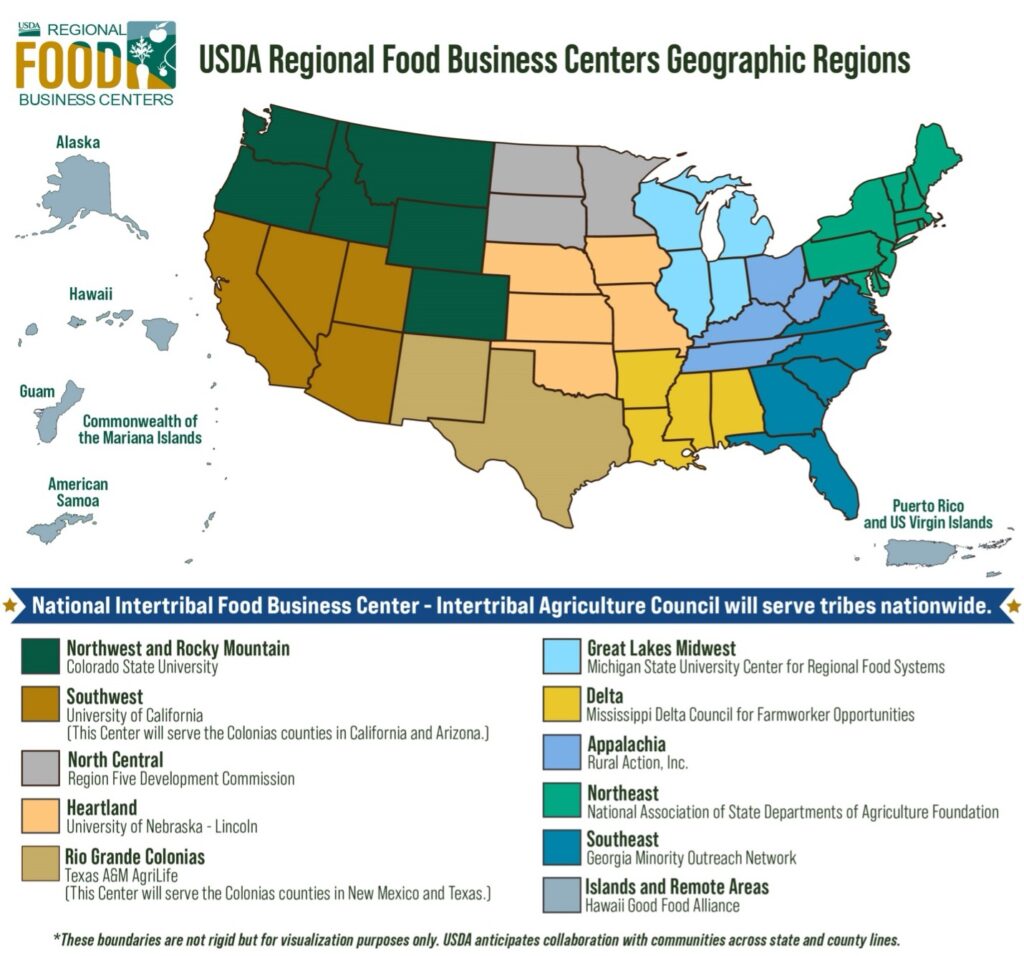
North Central Regional Food Business Center
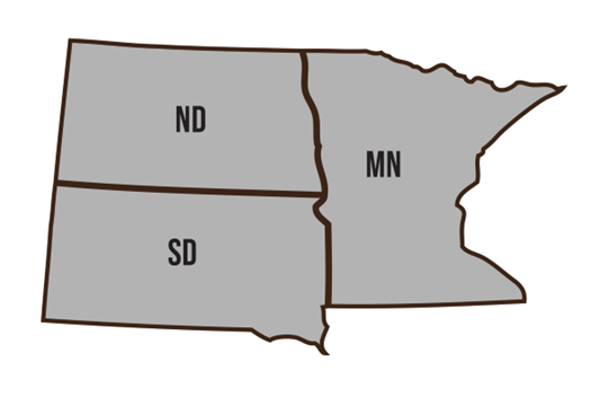
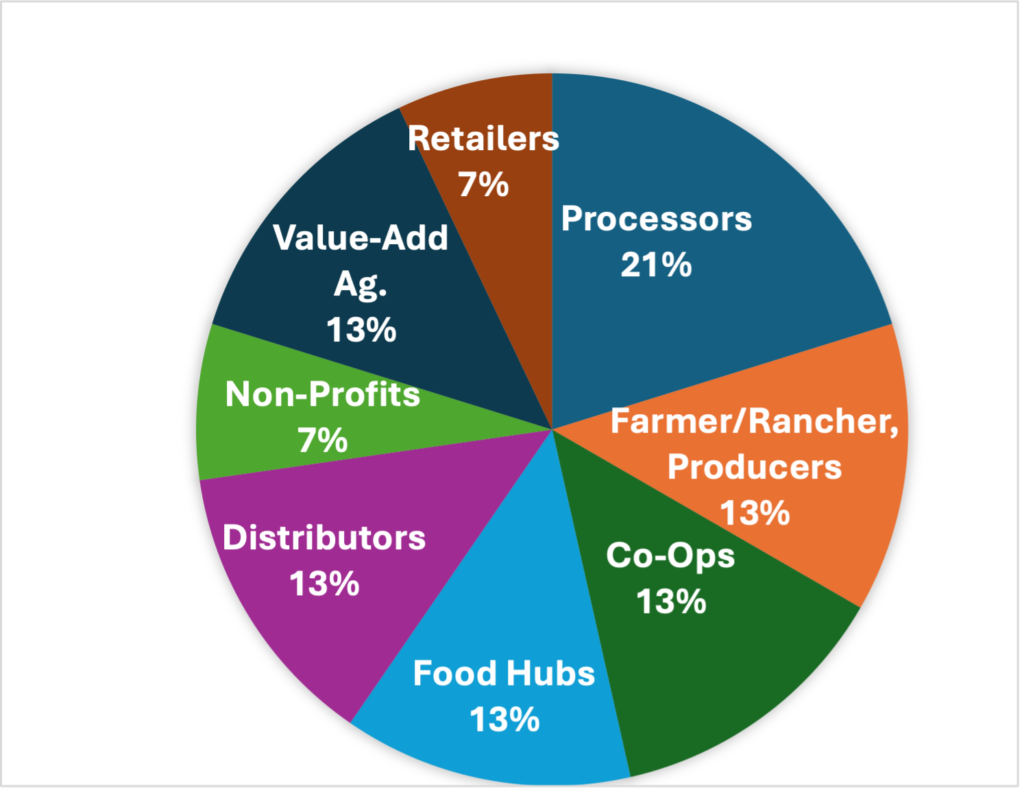
The North Central Regional Food Business Center is led by NADO member and Economic Development District (EDD) Region Five Development Commission (R5DC). In Summer 2023, at the request of R5DC, Melissa Levy, NADO’s regional development researcher and wealth creation specialist, offered wealth creation training in three states: Minnesota, North Dakota, and South Dakota. Region Five had engaged 35 key partners throughout the three states, including all EDDs.
North Central’s three priorities include:
Centralizing efforts from 35 different partners to deliver food value chain services to underserved communities, businesses, and people.
Helping direct culturally specific strategies and outcomes from expertise through Native CDFI’s, Latino Economic Development professionals, and small/mid-sized food value chain businesses.
Learning how grassroots partners can efficiently transform an industry on a multi-state level that creates long-term system impacts.
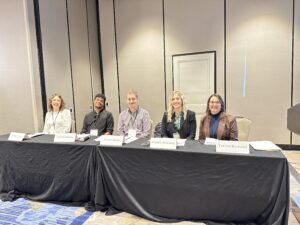
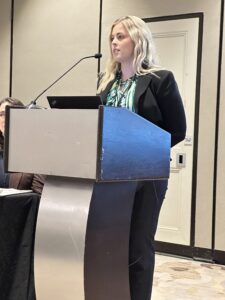
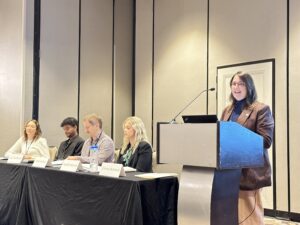
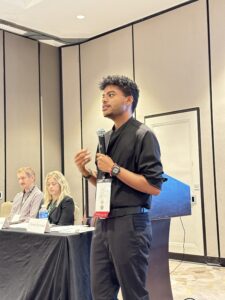
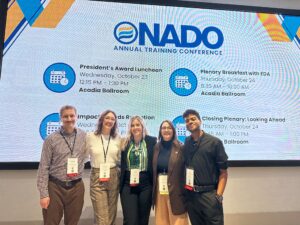
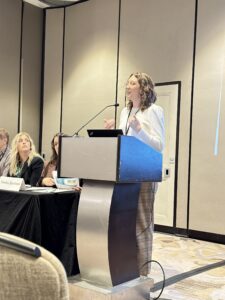
One year later, a panel session was held at the 2024 NADO Annual Training Conference in New Orleans, featuring the USDA Agricultural Marketing Service (AMS) regional coordinator for the North Central Regional Food Business Center Teresa Bertossi, representatives of EDDs in the region, a Latino economic development nonprofit operating in the region, and an Economic Recovery Corps fellow hosted at an EDD in the region.
One key success at the North Central RFBC is the even distribution across the three states of $600,000 in Business Builder sub-awards in 2024. These were granted to 15 existing businesses, 5 in each of the three states. Almost half (7 of 15) of the awards are directed at businesses operating or substantially serving distressed communities in the region. New businesses received 20% of the awards. Over half (53%) of the awards were used to purchase special equipment (food safety, processing, storage, packaging).
A two-day partner summit was also held in Fargo, North Dakota for all the RFBC partners, which included panel discussions, breakout sessions, as well as an intercultural development inventory assessment.
Overall, this work has been focused on community building, trust building, and financial literacy.
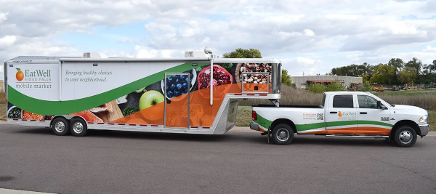
Dr. Sophie Johnson, Community Development Manager at South Eastern Council of Governments (SECOG), in South Dakota, discussed their work with the South Dakota Local Food Coalition and their support of the Eat Well Sioux Falls Mobile Market, which opened in October 2023. Over 60,000 Sioux Falls residents live in food deserts, and 11,500 of those who live in food deserts are in poverty. The goals of the mobile market are to:
Bring healthy, affordable food directly to food-insecure neighborhoods where transportation can be a barrier.
Provide a dignified way for families to purchase product at a reduced price.
Work with neighborhood residents to determine local food culture.
Partner with other organizations to provide other community services in the area.
The Eat Well Sioux Falls Mobile Market provides affordable groceries at seven locations in food-insecure neighborhoods and is open Monday through Friday, with occasional pop-up events on weekends.
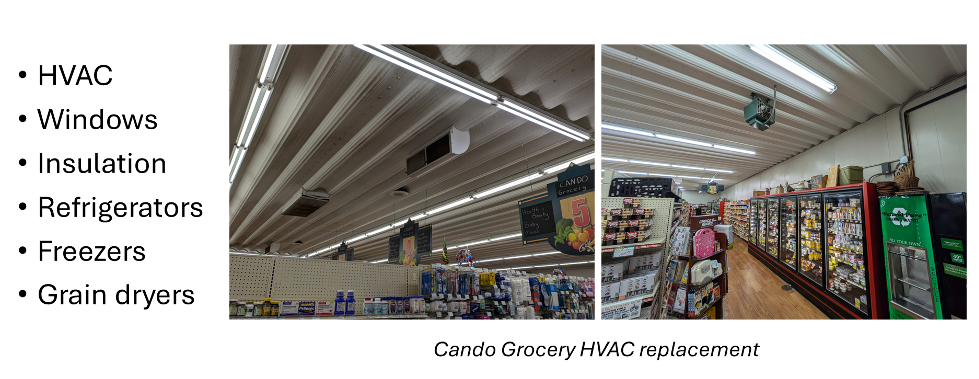
Mitch Calkins, Program Manager at the Lake Agassiz Regional Council in North Dakota, talked about receiving $250,000 in technical assistance grants to help with energy audits, technology assessments, and grant writing; their work is focused on energy efficiency improvements and renewable energy systems at grocery stores. Eligible improvements are those to HVAC, windows, insulation, refrigerators, freezers, and grain dryers.
Felicity Merritt is an Economic Recovery Corps fellow with the Souris Basin Planning Council (SBPC) in North Dakota. As someone with a local food systems background, Felicity has a unique perspective on food system-based economic development. She considers herself a bridge between technical assistance providers and local food businesses. SBPC has a role to play in facilitating value chain coordination; assisting smaller-scale food producers and food and farm businesses in identifying and navigating third-party financial assistance; and writing grant applications.
Levi Welbourn of the Latino Economic Development Center (LEDC) discussed his work, focused on advocating for Latinx/BIPOC small business owners to become strong and impactful competitors in the market. A partnership with the City of Minneapolis and the Minnesota Farmers Market Association led to the first-ever Latinx market showcasing diverse small businesses and food vendors to the Minneapolis community. LEDC is able to guarantee their farmers payment through the Sanneh Foundation, funding $15,000 for farmers’ produce that will then be donated and distributed to the community for free and taking any leftover produce to refugee communities. The LEAFF Program through the Good Acre serves as a state-funded farm-to-food shelf program, guaranteeing farmers a set dollar amount of produce and support by the program and provides culturally relevant food for local communities.